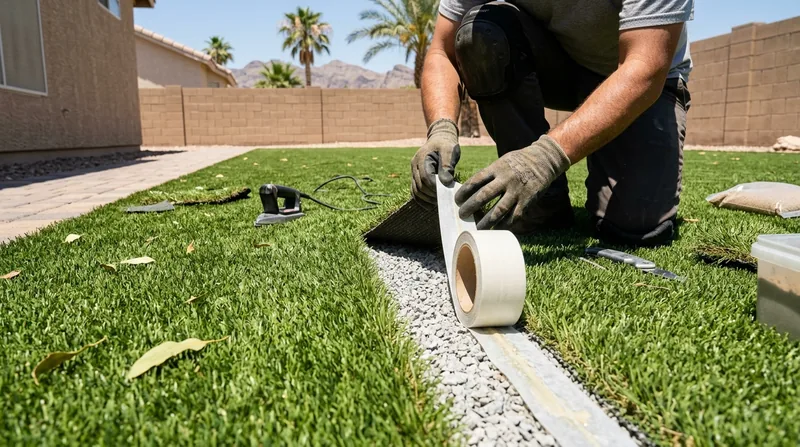




Synthetic turf in Yuma faces a punishing climate and heavy use. Summer surface temperatures exceed 150 degrees Fahrenheit, intense UV rays degrade seams and edges, and the dry desert air can cause infill migration and turf flattening in high-traffic zones. When seams separate, edges lift, or infill compacts unevenly across your yard, patio, or dog run, turf repair and seam repair in Yuma restore both function and appearance without a full replacement. We have been installing and maintaining artificial turf since 2013, and we know exactly how Yuma's heat, sun exposure, and residential patterns damage turf over time. Whether you have a residential yard in the Mesa Heights area, a pet turf installation in Somerton, or a commercial property near the downtown corridor, we repair seams, address lifted edges, fix drainage problems, and restore infill density so your turf looks finished and performs as designed. Learn how we keep your investment intact and when repair makes sense versus replacement.
Why Seam Separation and Edge Lifting Happen Fast in Yuma's Heat
Yuma's Sonoran Desert climate accelerates turf wear in ways that cooler regions never experience. The intense summer sun, daily temperature swings of 40 degrees or more, and the reflective heat bouncing off block walls and concrete expand and contract the turf backing continuously. Seams that were sealed perfectly in spring begin to gap by July. Pet traffic, foot patterns from kids, and the weight of patio furniture or pool loungers compress infill unevenly, leaving visible lanes and bare patches. When irrigation or storm runoff pools beneath the turf instead of draining properly, the backing softens and seams fail faster. We address the root cause, not just the symptom, so the repair holds through next summer.
- UV exposure and thermal cycling open seams, especially on south and west-facing yards in Yuma and Fortuna Foothills where afternoon sun is relentless.
- Pet urine and high-traffic pathways compact infill and flatten the pile, making seams more visible and prone to catching.
- Poor drainage or yard grading that channels water under the turf weakens the backing and destabilizes seams from below.
- Reflected heat from windows, pools, and light-colored walls can melt or distort turf edges and create soft spots that separate.
Catching seam problems early prevents water intrusion, keeps the yard safe for pets and kids, and extends the life of your installation.
Key info: A single open seam in a Yuma backyard can allow moisture and heat to penetrate the base within weeks, turning a $400 repair into a $4,000 replacement. We inspect seams every spring and after heavy monsoon rains to catch separation before water damage spreads.
For more details on how to maintain your turf and prevent common issues, see our guide to turf cleaning and pet odor treatment in Yuma.
How We Repair Seams and Edges: Step-by-Step Process in Yuma
Our seam repair method starts with a detailed inspection to identify the cause of separation or lifting. We probe the backing, check infill density, assess drainage, and photograph the damage so you understand exactly what failed and why. Once we know whether the problem is adhesive failure, thermal movement, water damage, or compaction, we execute the repair with the right material and technique for Yuma's conditions.
- We remove any debris, standing water, or damaged infill from the seam area and the surrounding zone.
- We lift and inspect the turf backing to assess moisture, adhesive integrity, and base condition beneath the seam.
- We clean the backing and base with appropriate solvents or drying methods so the new adhesive bonds properly.
- We apply marine-grade or polyurethane seam tape and adhesive rated for Yuma's temperature extremes, not generic hardware-store glue.
- We weight the seam under controlled conditions while the adhesive cures, then backfill infill and restore pile texture.
- We test the seam by hand and foot to confirm it holds before we leave the job.
The entire process takes 2 to 4 hours depending on seam length and the extent of underlying damage. We do not rush seam work, because a quick fix in July heat fails by September.
Local example: A family in Yuma's Araby neighborhood had a 15-foot seam separate along the edge of their pet turf installation. Moisture had pooled beneath the turf after a July monsoon downpour. We removed 8 feet of turf, regraded the base to improve drainage, replaced the base layer, and re-sealed the entire seam with heat-rated adhesive. The repair held through the following summer and the family avoided a full replacement that would have cost ten times as much.
For information on our residential turf installations and how proper base prep prevents seam problems from the start, visit our residential artificial grass installation page.
Repair Methods: When to Patch, Reseal, or Replace a Section
| Repair Method | Description | Best For |
|---|---|---|
| Seam Resealing | Clean, dry, and re-adhere the existing seam with marine-grade tape and polyurethane adhesive rated for 150+ degree heat. | Seams that have separated due to thermal cycling or UV degradation but the backing is still intact and dry. |
| Section Replacement | Remove a 3 to 8 foot section of damaged turf, prep the base, and install new turf with sealed seams on both ends. | Water damage, melted or severely distorted areas, or seams that cannot be resealed because the backing is compromised. |
| Edge Reinforcement | Lift the edge of the turf, inspect and repair the base, add edge banding or perimeter adhesive, and secure the edge. | Lifted edges around patios, pool surrounds, or high-traffic zones where foot traffic or temperature changes cause curling. |
| Infill Top-Up and Leveling | Add new infill and redistribute across flattened or compacted areas to restore pile height and appearance. | Pet turf installations in dog runs, high-traffic pathways, or zones where infill has migrated due to foot traffic or drainage. |
We assess your turf on site and recommend the repair method that gives you the longest life and best value. Sometimes a $400 seam reseal is all you need; sometimes a $1,200 section replacement prevents future failures.
Turf Repair and Seam Repair Cost in Yuma: What to Expect
Seam repair and edge work in Yuma start at $350 for a single seam up to 10 feet long, including inspection, cleaning, resealing, and infill restoration. Section replacement, edge reinforcement, and jobs that require base prep or drainage correction cost more and are priced on site. The main factors that affect cost are the length of the seam, whether water damage or base failure is involved, and how much turf must be lifted to access the problem area. A yard with multiple seam issues, poor drainage, or thermal damage that requires section replacement can run $1,500 to $3,500 depending on the scope. We provide a free, detailed estimate within 24 hours so you know exactly what the work entails and what it costs.
For a full pricing breakdown and examples of how we calculate costs for different repair scenarios, visit our pricing page. If you are comparing repair cost to replacement, remember that a well-repaired seam or edge can extend the life of your turf by 3 to 5 years, making the repair a smart investment.
Turf Repair and Seam Repair Near Me: What Yuma Homeowners Should Know When Hiring
When you call a turf installation company for repair work in Yuma, Somerton, San Luis, or Wellton, ask for a certificate of insurance naming general liability and workers compensation coverage. Request a written specification of the repair method, the adhesive or tape product being used, and the expected timeline. Get estimates from at least two companies so you can compare approach and price. Ask for references and photos of seam repairs they have completed in the desert climate. If your turf is under an HOA rule or your property has underground utilities, confirm that the company will respect those constraints and coordinate locates if needed. Many homeowners assume all seam repair is the same, but technique, material quality, and understanding of Yuma's thermal conditions make the difference between a repair that lasts two years and one that holds for a decade.
- Ask whether the company uses heat-rated adhesive and marine-grade tape designed for desert conditions, not generic products.
- Request a timeline for cure and curing conditions, because rushing a seam in 110-degree heat causes premature failure.
- Confirm that the estimate includes site inspection, removal of damaged infill, base assessment, and re-infill after resealing.
- Check whether the company offers a workmanship warranty on the repair and what it covers.
- Verify that the company has experience with your specific turf product and installation type, whether residential, pet, or commercial.
We stand behind our repairs with a one-year workmanship warranty and we are fully insured. Call us at (928) 615-6509 for a free estimate, or visit our contact page to request a visit to your Yuma or surrounding-area property.
Turf Repair & Seam Repair in Yuma: Pricing Guide
| Service | Price | Details |
|---|---|---|
| Single seam reseal | Starting at $350 | Up to 10 feet long, includes inspection, cleaning, marine-grade adhesive, infill restoration, and warranty |
| Multiple seams or edge reinforcement | Starting at $600 | Two to four seams or one full perimeter edge, assessed and priced based on total linear feet and base condition |
| Section replacement or major water damage | Starting at $1,200 | Removal, base inspection and repair, new turf installation, sealed seams, and infill; cost varies by section size and drainage work needed |
| Infill top-up and compaction repair | Starting at $400 | Restore pile height and appearance in flattened dog runs or high-traffic zones; pricing per square foot and density required |
| Travel and estimate | Free | No charge for on-site inspection and written estimate within 24 hours; included in all Yuma and surrounding service areas |
Indicative pricing, the exact cost depends on square footage, finish, and site access. Free personalized estimate within 24h at (928) 615-6509.


